











🟧 The Sugar Trap
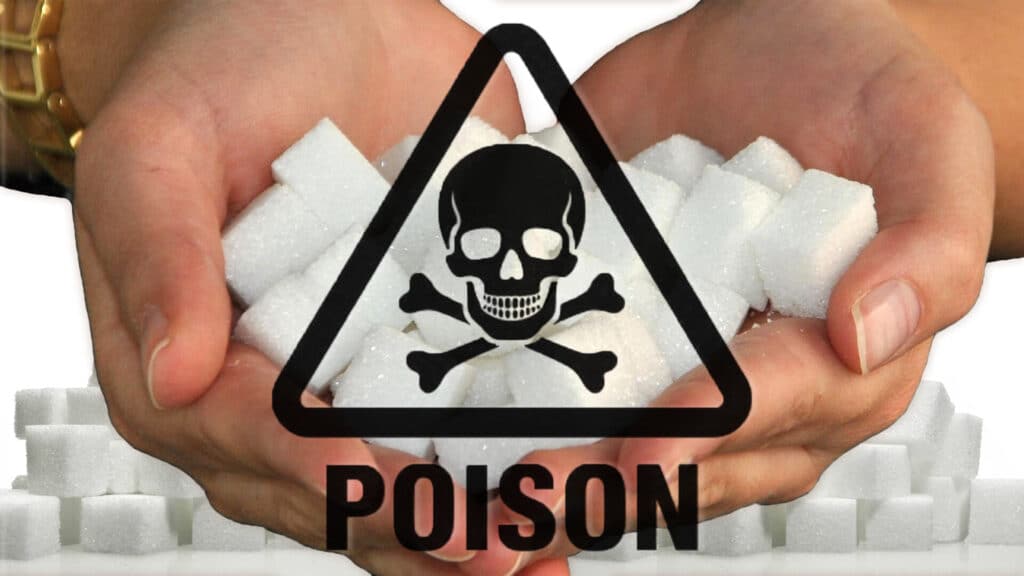
Not just unhealthy.
Not just processed.

Wrong.
You notice it the moment you start paying attention.
Take a simple can of orange soda. In the United States, one popular brand contains around 44 grams of sugar. The exact same drink in the UK? Around 15 grams — often with actual fruit juice inside.
Same company. Same flavor.
Completely different formula.
That is the moment you realize this is not random. It is engineered.
🟧 Sugar Is Everywhere — And That Is the Real Problem
Most people still think sugar is only in: Candy. Cake. Desserts.
But that is not where the real battle happens anymore. Nowadays sugar is hiding in foods that were never supposed to be sweet in the first place.
Bread.
Salad dressings.
Protein bars.
Breakfast cereals.
Yogurts.
Sauces.
Sports drinks.
Even foods marketed as “healthy” are often loaded with added sugar.
You are not occasionally eating sugar. You are constantly surrounded by it. And after a while, your taste buds begin adapting to that level of sweetness. It’s almost like real food starts to taste “boring,” while ultra-processed food lights up your brain instantly.
That is not weakness. That is conditioning.
🟧 The Numbers Are Insane
At the beginning of the 1900s, the average person consumed roughly 4 pounds of sugar per year.
Today?
The average American consumes somewhere between 150 and 170 pounds annually.
Picture that.
That is like carrying around three or four large bags of cement made entirely of sugar every single year.
Or pouring one full cup of sugar into your body every single day.
Because that is essentially what is happening.
The average adult now consumes around 22 teaspoons of added sugar daily. Teenagers often consume closer to 34 teaspoons.
And here is what makes this worse: As of recent estimates, over 70% of packaged foods contain added sugar.
So even when you think you are eating “normally,” sugar is already built into the system around you.
🟧 The Food Industry Did Not Accidentally Create This
Back in the 1970s, fat became public enemy number one. Food companies rushed to create “low-fat” products. There was just one problem. Without fat, food tasted terrible. So the industry replaced fat with sugar.
At the same time, high-fructose corn syrup exploded into the market because it was cheap, easy to mass produce, and incredibly effective at making food taste addictive.
That changed everything.
Modern processed food became less about nourishment and more about creating repeat customers. And sugar became one of the cheapest and most powerful tools to make that happen.
🟧 Your Brain Was Never Designed for This
This is not just about taste. Sugar affects the brain directly.
When you eat highly processed sugary food, the brain releases dopamine — the same neurotransmitter connected to reward, pleasure, motivation, and habit formation.
That temporary “feel good” hit is real.
But here is the problem: The modern food environment learned how to exploit that system.
Scientists have studied how combinations of sugar, fat, salt, texture, and artificial flavoring affect human behavior. Food companies invest millions into making products more craveable because the longer you keep eating, the more profitable you become.
And once you understand that, something suddenly makes sense: You are not crazy for craving junk food all the time. You are living inside a system specifically designed to trigger cravings!
🟧 Even Athletes Are Getting Caught in the Trap
A lot of active people believe training cancels out bad nutrition.
It doesn’t.
You can train hard five or six days a week and still feel exhausted if your body constantly runs on ultra-processed food and unstable blood sugar.
Too much processed sugar affects recovery. It affects sleep quality, focus and inflammation.
And perhaps the biggest problem: It trains your body to constantly chase quick energy instead of building stable energy. That is why so many people feel tired despite eating more than enough calories – they are overfed and undernourished at the same time.
For athletes, dancers, movers, and anyone who trains seriously, that matters. Because performance is not just about calories. It is about what those calories are actually doing inside your body.
🟧 The Discipline Argument Misses the Point
“Just eat better.”
“Have more discipline.”
“Make healthier choices.”
Sounds nice. Right?
But it ignores reality.
You and I live in an environment where ultra-processed food is cheap, convenient, heavily advertised, and available everywhere.
Most people are tired.
Busy.
Stressed.
Working long hours.
When you are exhausted at the end of the day, you usually do not make perfect decisions. You make available decisions.
And the food industry understands that perfectly.
🟧 Some Countries Finally Started Fighting Back
Countries like Mexico, Chile, and Colombia have already started placing warning labels on ultra-processed foods and sugary drinks.
Black warning stamps.
HIGH IN SUGAR.
HIGH IN CALORIES.
HIGH IN SODIUM.
Simple. Direct. Impossible to ignore.
Why?
Because governments realized something important: Most people are not nutrition experts.
And when products are designed to look harmless while quietly damaging health, consumers deserve clearer warnings. Interestingly enough, the food industry pushed back hard against these labels. That alone should make people think.
🟧 Step Outside the System and You Notice It Immediately
Ingredients are recognizable.
Meals feel simpler.
We cook more.
Portions are often smaller.
Sugar is not hiding in everything.
Not a luxury product.
And perhaps that is one of the biggest problems modern societies face today: Ultra-processed food slowly became the default. People stopped questioning it because it became ordinary.
🟧 Why We Wrote This Article
This article is not about creating fear. And it is definitely not about perfection. You do not need to panic over one dessert or a slice of birthday cake.
The real danger is when ultra-processed, high-sugar food quietly becomes the foundation of your daily life.
Because once unhealthy becomes normal long enough, most of us stop recognizing it as unhealthy.
That is the trap.
The good news? Awareness changes things. Once you understand how modern food is designed, you start making different choices.