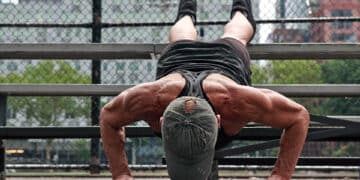












Decline Push-Ups – how long has it been since a push-up actually challenged you?

If you’re serious about building a chest and shoulders that turn heads, the standard push-up won’t cut it forever.
At some point, your body adapts, and you hit a plateau.
That’s where decline push-ups come in — an exercise that takes your upper body strength and definition to the next level.
🟧 Why Decline Push-Ups Matter
Elevating your feet shifts more of your body weight onto your upper body. The result? Increased resistance, greater intensity, and a load that your chest and shoulders will feel immediately.
Unlike the regular push-up, this variation is angled to target the upper chest and front shoulders, forcing muscles that rarely work this hard in standard push-ups to grow stronger and more defined.
🟧 Targeted Upper Chest Activation
Here’s the difference that matters: when your feet are raised, the pressing angle changes. This shifts the load to the clavicular head of your pectoralis major — the upper part of your chest.
What does that mean for you?
A fuller, stronger, more defined upper chest that complements the lower chest you’ve already built. Standard push-ups give you volume; decline push-ups are great for your shape and power.
🟧 Shoulder Strength That Holds Up
Your anterior deltoids (the front of your shoulders) take a heavy load when you’re in a declined position. Every press forces your shoulders to stabilize and push through the resistance.
The payoff is serious: stronger shoulders that improve your pressing power, shoulder stability, and injury resistance. This isn’t just about looking strong — it’s about performing like it, too.
🟧 Break Through Plateaus
You can crank out 50 regular push-ups without breaking a sweat. But add a decline, and your body hits a new challenge immediately.
This variation forces your muscles to adapt, building strength and muscle definition faster. If you want real progress, you need exercises that push your limits — adding decline push-ups to your routine help you to achieve that.
🟧 Core Engagement and Full-Body Stability
Decline push-ups aren’t just about your chest and shoulders. To hold your body straight from head to heels, your core muscles, glutes, and spinal stabilizers have to work overtime.
The result: a stronger, tighter core, improved balance, and better overall body control. Every rep reinforces functional strength you can carry into other lifts and movements.
🟧 Prepare for Heavy Lifts
Think of decline push-ups as a bridge to serious pressing strength. The pressing power you develop here translates directly to barbell bench presses, overhead presses, and other advanced upper-body lifts.
It’s functional, transferable, and built to make you stronger, faster, and more explosive.