











Mobility vs. Flexibility – If your goal is to move better, train harder, and stay pain-free for the long run, you need to understand one thing clearly: mobility is not the same as flexibility.
A lot of people mix the two up — or focus only on passive stretching and wonder why their performance plateaus or nagging pain keeps coming back.
Let’s change that.
🟧 First: What’s the Difference?
Flexibility is your body’s passive range of motion — how far a joint or muscle can lengthen when pulled. Think of touching your toes or doing a split. Flexibility is often trained through static stretching and relaxed positions.
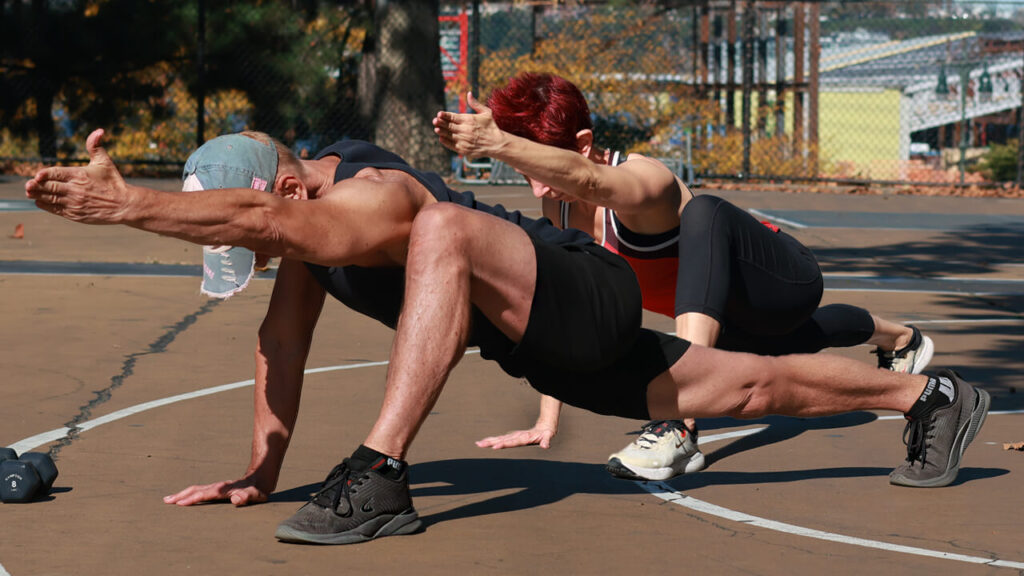
Mobility, on the other hand, is your body’s active range of motion — how far you can move a joint with strength, control, and coordination. It’s not just about how far you can go, but how well you can move through that range under load, under tension, and in real-life movement.
In short:
Flexibility is how far you can stretch.
Mobility is how well you can move — with control and purpose.
🟧 Why Flexibility Alone Isn’t Enough
You can be flexible and still get injured.
You can sit in a deep stretch — but the moment you add resistance or dynamic movement, your body might not know what to do with it.
And that’s where mobility training comes in.
🟧 Mobility = Flexibility + Strength + Control
Mobility is what gives your body real-world capability. It allows you to:
Move with precision and flow
Lift safely and deeply through compound exercises
Reduce stress on your joints and improve alignment
React better in sports and high-speed movements
It’s about owning your range of motion — not just entering it.
🟧 What Happens When You Lack Mobility?
Lack of mobility limits your movement quality — and over time, that limitation turns into stress, stiffness, and dysfunction.
Here’s what can happen:
You move only in short, repetitive ranges → your joints wear unevenly.
You stretch more, but it doesn’t help → because the nervous system isn’t engaged.
You overload tight muscles → causing compensation patterns, knots, and poor posture.
You add weight before you build control → setting yourself up for injury.
Mobility issues don’t just affect the joint — they affect your muscles, your movement patterns, and even your nervous system.
🟧 Why Mobility Matters (More Than You Think)
Let’s break it down into benefits you can feel and see:
✅ 1. More Functional Range of Motion
Mobility expands your usable range. That means you can squat deeper, press overhead more efficiently, or rotate your spine without hesitation. You’re not just moving further — you’re moving better.
✅ 2. Stronger Lifts, Safer Gains
Training in full, controlled ranges translates to better muscle activation and joint alignment. That means more strength, more hypertrophy, and less joint stress — especially in compound lifts.
✅ 3. Better Posture, Less Tension
If you’re stuck in a forward-slumped desk posture, you can’t fix it just by “sitting up straight.” You need the mobility to access a healthy position, and the strength to hold it — without thinking about it all day.
✅ 4. Injury Prevention
Most training injuries stem from poor movement mechanics. When you’re mobile, your joints glide better, your muscles fire more efficiently, and your movements are less likely to hit a wall (literally and metaphorically).
✅ 5. Joint Longevity
When your joints move through full ranges, they get nourished with synovial fluid and blood flow. That keeps cartilage healthy and wear-and-tear in check. Think smoother, stronger, longer-lasting joints.
🟧 How to Train for Mobility
Good news — mobility work doesn’t require you to overhaul your entire routine. You just need to train smart.
Add mobility drills to your warm-up (hips, shoulders, spine).
Use active end-range exercises (like controlled articular rotations or band-resisted work).
Focus on eccentric control in your strength training.
Explore functional patterns like squatting, reaching, rotating.
Stay consistent — 15–20minutes a day can change your movement life.
And if you want to go deeper? Dedicate 1–2 full sessions per week to targeted mobility. You’ll feel the difference — not just in training, but in how you live and move day to day.
🟧 Final Word: Movement Is the Key
Mobility is a mindset as much as a method.
You don’t get more mobile by doing nothing.
You become more mobile by moving with intention, training with depth, and respecting your body’s potential.
So, if you want to run faster, lift smarter, move pain-free, and perform at your best — stop stretching mindlessly and start moving purposefully.
Train your mobility. Own your movement. And build a body that works for life.