


How Movement Can Bring You Back to Yourself
Having a fitness career that spans more than twenty-five years makes me deeply grateful.
I’ve trained, performed, and taught around the world — worked with incredible companies, met thousands of students, owned two studios, and lived the dream that once felt out of reach.
But I have to be honest — along the way, I also faced two major burnouts.
Looking back, I realize they weren’t just about overtraining or long hours. They came from something deeper — emotional needs I had ignored for too long.
Don’t get me wrong — I love what I do. Movement has always been my passion and purpose. But the truth is, when you’re constantly creating, performing, and giving energy to others without taking time to refill your own cup, it catches up with you.
No time for recovery.
No real pause.
Just constantly doing and being on the go.
Eventually, it hits you — that quiet breaking point when everything feels heavy, your motivation fades, and even simple things seem hard.
You feel tired, empty, disconnected. It’s as if someone slowly turns down the light, and you’re not even sure when it began or how to stop it.
You just realize you’re on a downward spiral.
I’ve been there. Twice.
And that’s why I’m writing this — because if you’ve ever felt something similar, I want to share what helped me find my way back.
🟧 What Burnout Really Feels Like
Burnout doesn’t hit all at once.
It creeps in quietly — a slow fade between pushing harder and feeling less.
At first, you tell yourself it’s just fatigue — you just need a weekend off.
Then a weekend turns into weeks, and even taking time off doesn’t feel like recovery anymore.
I remember mornings where I’d wake up already tired — where doing simple things felt like a struggle. It wasn’t that my body couldn’t move.
It was my motivation that disappeared, buried under the weight of exhaustion — physical, mental, emotional.
That’s the strange part about burnout.
From the outside, everything might look fine.
You still show up. You still perform.
But on the inside, there’s that quiet voice saying, I can’t keep up with this.
And you try to ignore it — until you can’t.
Movement, for me, was always the language I could still understand when words or logic didn’t help anymore.
It took me out of my busy mind and back into my body — and in return, gave me new ideas and perspective.
But that connection was lost.
🟧 Step One: It Starts in Your Mind
When you’re deep in burnout, the hardest part isn’t that you’ve lost your strength — it’s that you’ve lost your spark.
You don’t recognize yourself anymore.
Your thoughts keep spinning, replaying the same worries, regrets, and what-ifs.
The mind becomes its own exhausting workout — only this time, there’s no recovery.
For dancers, athletes, or creative people, this can feel especially brutal.
You’re used to performing, creating, pushing your limits.
Suddenly, that inner drive — the one that used to lift you — turns against you.
You start questioning everything: What happened to me? Why can’t I just snap out of it?
That’s the trap.
The harder you try to think your way out, the deeper you get pulled in.
What helped me wasn’t forcing myself to “be positive.”
It was realizing that my mind was tired — not broken, not weak — just tired.
So the first and most important step was giving myself permission — to pause, to breathe, to stop fighting my own thoughts and feelings.
You have to give yourself time: stop trying to fix yourself and start listening.
It’s quiet work — sitting with what’s there, feeling what you feel, without judgment. Focusing on your breath – and if it’s only for a few minutes. Taking a walk without music. Simply noticing how your body feels from the inside.
It starts in your mind.
Small moments of awareness help calm the storm — and create the space to reconnect.
🟧 Step Two: Then Movement Follows
When your mind finally gets a little quieter — and this will take a while — bring some movement back, gently and without pressure.
It’s not about training, goals, or structure.
It’s simply about reconnecting and feeling your body again.
For me, it started with small things: stretching on the floor, sitting in silence and letting my ribcage move with my breath, standing by the window and feeling sunlight on my skin.
None of it looked like a workout — but it felt good in that moment.
Movement has a quiet intelligence.
It doesn’t ask for perfection — only presence.
Each simple move, each breath, each moment of slowing down tells your body and mind: I’m here. I’m safe. I can let go.
That’s what begins to lift the fog.
When I was slowly finding my way back, I chose what felt good — not what I thought should feel good.
I tried Yin Yoga — slow, mindful sessions that helped me create space through my body.
Swimming — I’ve always loved being in water — gave me a sense of lightness and freedom.
Walking outside, in the park or along the river, brought air and color back into my day.
It wasn’t easy. Some days I didn’t move at all.
But what mattered was the intention — and I reminded myself: this is part of healing too.
Because movement after burnout isn’t about pushing again.
It’s about rebuilding trust — with your body, your mind, and your rhythm.
When you begin to move again, even gently, your body starts to release what’s been held.
Endorphins, serotonin, and dopamine begin to rebalance your mood. But beyond the science, there’s something deeper — you start to feel alive again.
You remember that you’re not stuck in your head anymore.
And that’s where healing truly begins.
So start small. Go easy.
Even when you experience a setback — try again.
🟧 How Movement Heals You Over Time
Once movement finds its way back into your life, it begins to do something subtle — it rewires the connection between your body and your mind.
In the beginning, you might not feel much.
You stretch, breathe, go for a walk — and your thoughts are still noisy.
But over time, your body starts leading the way.
You start taking up space again — not just physically, but emotionally too.
That’s the beauty of it.
Movement doesn’t just strengthen you; it teaches your system that energy can flow again.
Every time you show up, even for a few minutes, you’re training yourself to return to presence — to step out of survival mode and back into the moment.
I began to notice the difference in small, almost quiet ways.
I slept better.
My mood stabilized.
I found my first joyful moments again.
And slowly, creativity returned — not forced, but as a natural part of being me again.
You start realizing that movement heals not because it’s physical, but because it’s part of life. It gives you feedback, rhythm, breath, and the gentle reminder that you’re still capable of feeling joy — even after everything.
Healing isn’t about erasing what happened.
It’s about integrating it — using your body, breath, and awareness to rebuild trust in yourself.
For me, movement — in its simplest form — became that bridge from burnout to balance, from disconnection to belonging, from surviving to living again.
🟧 Step by Step, You Find Your Way Back
If you’ve read this far, maybe you’ve seen a part of yourself here — maybe you’ve been pushing too long, giving too much, and feeling like the light inside you has dimmed.
I know that place — I’ve lived there.
But here’s what I’ve learned: healing doesn’t come from forcing your way out.
It comes from listening, allowing, and taking small, honest steps back into yourself.
It starts in your mind — with one thought, one intention — and continues through your body, with one breath, one movement at a time.
There’s no quick fix, no perfect plan.
But there is progress.
Burnout might feel like an ending — but in truth, it’s often a beginning.
The moment you finally stop running and start returning to what really matters.
And when you move again — not to perform or prove, but to reconnect — that’s when everything begins to shift.
So wherever you are right now — start there.
Because healing doesn’t happen in one big step.
It happens in motion — one moment, one choice, one movement at a time.
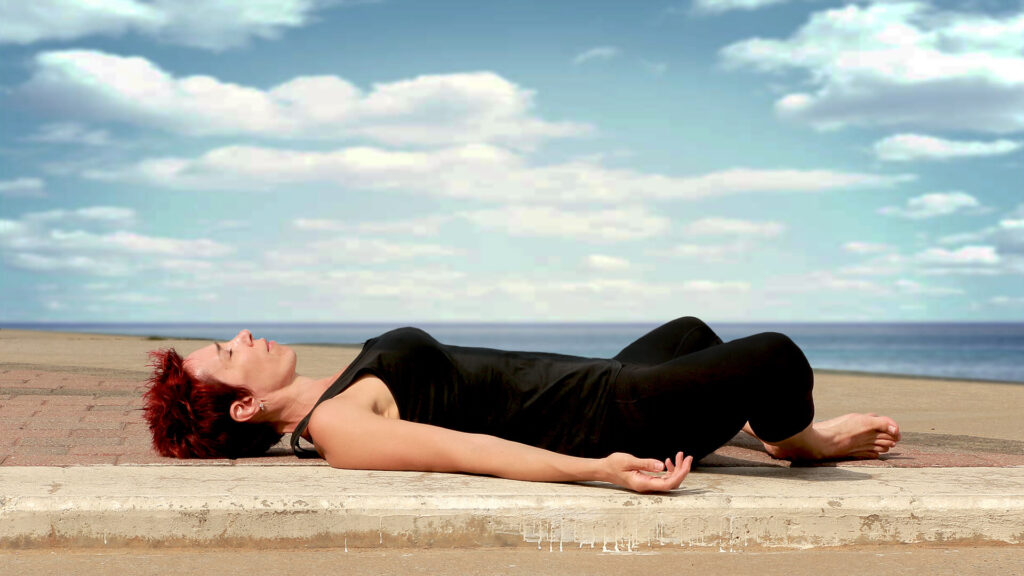
When you begin to reconnect, you realize something profound — your body and mind were never separate. They’ve been speaking the same language all along. The question is, are you ready to listen?
Continue reading: 🟧 Your Body and Mind Speak the Same Language
© 2026 Joschi International, Inc. All Rights Reserved.