










🟧 When Protein Became an Obsession
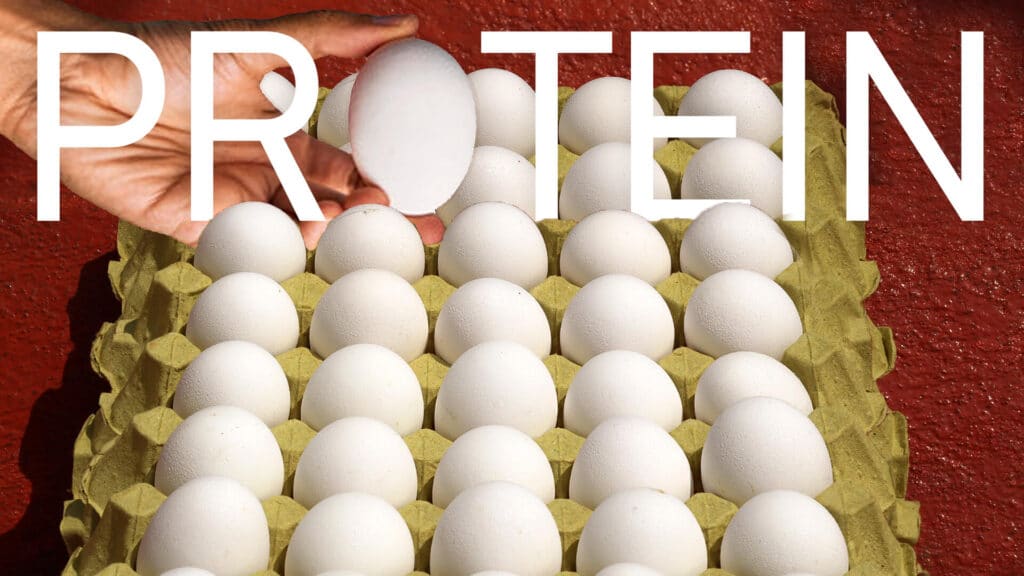
Ten years ago, nobody asked how much protein you ate today.

If someone did, you would’ve looked at him like he just asked how many times you blinked. Now it’s normal. It’s in podcasts, in offices, and in group chats. It’s printed in bold letters across cereal boxes like a badge of honor.
Protein went from gym talk to dinner table talk.
For years, families cooked based on taste, culture, and whatever was in the fridge. Lentils were just lentils. Milk was just milk. Eggs were eggs. Nobody tracked grams per kilogram of bodyweight. People ate to feel full. That was enough.
Now we eat to optimize.
The protein aisle is exploding. What used to be a dusty tub of whey for bodybuilders is now a global industry worth tens of billions. And when something becomes a billion-dollar machine, you and I should pay attention.
But here’s the part most people don’t realize.
Most adults already hit the minimum protein requirement.
So why does it feel like we need more?
🟧 The Minimum Is Not the Goal
The old recommendation was built around survival. Around preventing deficiency. Roughly 0.8 grams per kilogram of bodyweight keeps you from wasting away.
That’s the floor. Not the ceiling.
You and I don’t train to survive. We train to perform, recover, and build something.
Once you lift, sprint, move with intensity, the number shifts. Now we’re talking roughly 1.2 to 1.6 grams per kilogram of bodyweight as a solid range for active adults. Sometimes more if you’re in a calorie deficit and trying to hold onto muscle.
That’s not hype. It’s physiology.
After 30, muscle mass declines if you don’t challenge it. Slowly at first. Then faster. Less muscle means lower metabolism, less strength, slower recovery, and higher injury risk.
Protein isn’t about chasing size. It’s about staying capable.
🟧 The Real Problem Isn’t Just Quantity
Here’s where things get uncomfortable.
The issue isn’t only how much protein we eat. It’s what it comes packaged with.
A huge percentage of daily calories still comes from ultra-processed foods. High sugar. Refined carbs. Industrial fats.
You can slap 20 grams of protein onto a cookie and call it functional.
It’s still a cookie.
Protein doesn’t cancel out poor food quality. A high-protein cereal loaded with sugar doesn’t become performance fuel just because the label says “High Protein.”
It becomes good marketing.
And marketing right now is loud.
Social media amplified everything. Influencers talk macros. Doctors talk muscle loss and aging. Food brands reformulate products and stamp PROTEIN across the front like a medal.
Consumers read labels. They compare grams per serving and are willing to pay more.
That awareness isn’t bad.
But awareness without understanding turns into obsession.
🟧 What Actually Matters
Total daily intake matters. Yes.
But distribution matters too.
If you eat 10 grams at breakfast, 15 at lunch, and 80 at dinner, you’re not giving your body consistent signals to build and repair. Spreading protein evenly across the day works better. Solid doses in each meal. Not one giant protein bomb at night.
Consistency beats extremes.
Quality matters as well.
Eggs, dairy, meat, and seafood contain all essential amino acids in proportions your body recognizes immediately. Plant sources absolutely work, but often need to be combined or eaten in higher amounts to match the same amino acid profile.
Whey digests fast and works well around training. Casein digests slower and supports overnight recovery. Whole food sources bring micronutrients and minerals that powders simply don’t.
And then there’s the part nobody wants to hear.
You can hit 180 grams of protein per day and still feel terrible if you sleep five hours, never train with intensity, and sit all day.
Protein does not fix stress.
It does not fix poor sleep or inactivity.
It supports the work and doesn’t replace it.
🟧 From Calories to Capability
I’ve seen people eat 2,500 calories with barely 60 grams of protein and wonder why they don’t recover from training.
And crazy enough – I’ve seen people live on protein bars and shakes yet still feel soft and tired because the rest of their nutrition is chaos.
Both extremes miss the point.
Protein is a tool. Not a religion.
If you train hard, want to build muscle, support your immune system, and age without shrinking into yourself, you need enough of it. Not because it’s trending. Because your biology demands it when you ask more from your body.
Start with real food. Build your plate around a solid protein source. Spread it across the day. Train with intent. Sleep like it matters.
Use supplements if needed. Not as a personality.
The protein boom isn’t just a trend. It reflects something deeper. People are tired of feeling weak and soft. Tired of eating enough calories but not feeling strong.
And that’s the shift I respect.
The question isn’t how many grams are printed on your cereal box.
The real question should be:
Are you eating in a way that matches the life and performance you say you want?