🟧 Let’s Talk About – Training
Why nothing works without it
Let me be very clear before we go any further.
Nutrition matters. Recovery matters. Mindset matters. Supplements can help.
But without training, nothing changes.
Your body does not adapt because you plan well. It adapts because you stress it, challenge it, and force it to respond. That only happens through training. Everything else supports the process, but nothing replaces it.
If you want an athletic body, training is not one part of the equation — it is the equation.
That’s why we start here.
🟧 Muscles Are Built in the Gym
You’ve heard the phrase: “Muscles are built in the kitchen.”
It sounds smart. It sounds clean.
It’s also misleading.
Muscles are stimulated in the gym. Without that stimulus, nutrition has nothing to work with.
You can eat perfectly, supplement intelligently, and recover like a professional. But if you don’t train hard enough to challenge your body, your physique will not change.
🟧 How Muscle Is Actually Built
Building muscle isn’t complicated.
You apply stress.
Your body adapts.
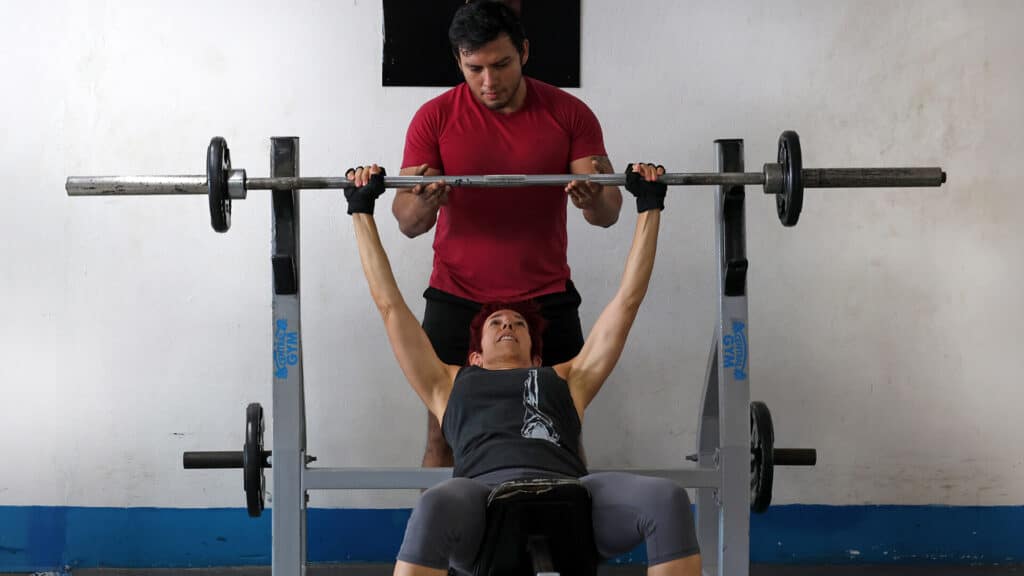
That stress comes from progressive overload — asking your muscles to do more than they’re currently capable of doing. As you get stronger, the demand has to increase. Heavier loads. Harder variations. More control. More intent.
Training creates microscopic damage in muscle fibers. During recovery, your body repairs that tissue and adapts by making it stronger and more resilient.
That cycle — stress, recovery, adaptation — is what builds muscle.
And it starts in the gym.
🟧 Training to Build vs Training to “Feel Active”
This is where most people miss the point.
There’s a difference between activating muscles and building muscles.
Activation feels good.
Building feels demanding.
If your training never challenges you — never pushes your strength, control, or endurance — your body has no reason to adapt. You’re moving, but you’re not changing.
That doesn’t mean every session needs to destroy you.
But it does mean your muscles must experience real mechanical tension.
If nothing feels challenged — during training or after — you didn’t give your body a reason to grow.
🟧 Why Training Comes First
I see this over and over again.
People obsess over food quality, macros, supplements, and recovery tools — but train without intent. They sweat, finish workouts, and check the box… without ever demanding more from their bodies.
Those are the physiques that stall.
The athletes who change are the ones who train with purpose. They progressively challenge their bodies and let everything else support that process.
Training is the signal.
Everything else is amplification.
🟧 The Standard Going Forward
This series exists to cut through the noise, not trends, shortcuts, and comfort. So, if you want an athletic body, you must train for adaptation — not just activity.
Show up.
Apply stress.
Recover.
Repeat.
That’s where it starts.
#BuildToMove